
Chromium Copper Contact
Introduction
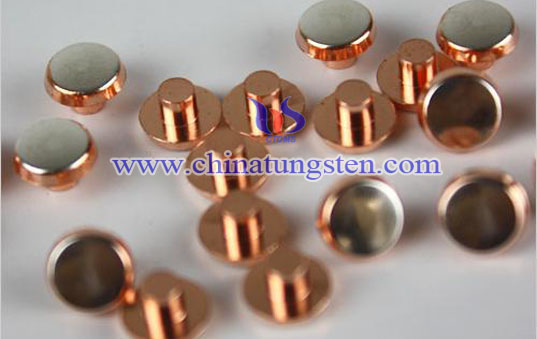
Chromium copper contacts after aging treated, the hardness, strength, electrical conductivity and thermal resistance are significantly improved, and then it is easy welding. Currently, vacuum switch contact material for the different specifications can be broadly divided into three types, semi-refractory metal conductor, such as chromium copper contacts; refractory metal conductor, such as tungsten copper alloy; copper alloy, such as copper bismuth alloy. Comparison of the results of these three materials shows that copper-bismuth alloy as the material representative of the gas content in addition to the optimum aspect, the other properties were lower than the first category represented chromium copper contact materials. Therefore, the current third-class material is used on some older low-performance products, and chromium copper contacts being completely replace copper-bismuth alloy. So far, there have not yet found a new electrical contact material's properties in the application of high power vacuum are better than copper chromium contact.
Usage
Although chromium copper contacts have been successfully developed as early as the end of the last century, and used for industrial vacuum switch in 1972. But it recognizes its superior performance, and that it can fully replace the popular copper-bismuth alloy process is very long. After 1980, the advantages of chromium copper contacts was widely acknowledged to be, after 1992, the new material has been used in large-scale high-current medium-voltage vacuum switch, and phasing out the first generation of vacuum copper-bismuth alloy contact material.
Preparation Process
Chromium copper contact main preparation process methods include powder sintering method, powder sintering Infiltration and consumable electrode method.
Chromium content with 25% in chromium copper contacts can ensure good electrical contact properties, high copper content can make contact material having a high electrical and thermal conductivity, help to increase the contact breaking current capability, so high alloy chromium content is neither necessary nor reasonable, the latest research results on the impact of the alloy chromium content of the show, when the chromium content of 25% to 75% range, whether single cathode material arc burning corrosion rate or total arc erosion rates were essentially the same, the average current chopping alloy has nothing to do with the alloy chromium content, but whether it is the contact resistance of the body or surface contact resistance increased with increased alloy chromium content increases. Currently powder sintering method and the consumable electrode copper-chromium alloy prepared by the chromium content is within the range of 25% to 40%, while the infiltration process of law in accordance with special needs, usually use 50% chromium alloy.