Copper-Embedded Tungsten Electrode
1. What's Copper-Embedded Tungsten Electrode?
Copper-embedded tungsten electrode is composite electrode with copper alloy shank or base and tungsten or tungsten-lanthanum alloy working tip. Unlike homogeneous tungsten copper alloy produced by sintering, it combines separate copper and tungsten components through an appropriate joining process. CTIA's copper-embedded tungsten electrodes feature a copper shank that provides electrical conductivity, heat dissipation, and structural support, while the tungsten tip withstands high temperatures generated by arcs or electrical discharges due to its high melting point and arc erosion resistance. This structure combines current carrying capacity, heat dissipation, and working-end durability for applications such as Electrical Discharge Machining (EDM), resistance welding, and high-voltage electrical contacts.
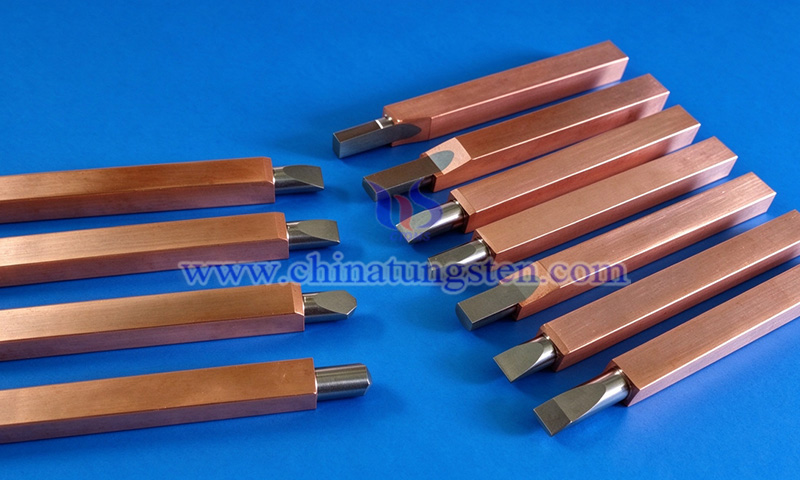
2. Characteristics of CTIA's Copper-Embedded Tungsten Electrode
(1) Balanced Conductivity, Heat Dissipation, and Arc-Erosion Resistance: The copper shank handles electrical conductivity and heat dissipation, while the tungsten tip withstands localized high temperatures and arc erosion.
(2) Low Working-End Wear and Good Profile Retention: Tungsten's high melting point helps reduce tip wear during electrical discharge or welding, helping maintain precise working profiles.
(3) Stable Structure for Precision Machining: The composite design provides structural rigidity, making the electrode suitable for applications requiring accurate positioning, perpendicularity, and profile tolerances.
(4) Adaptable to Repeated Discharges or Continuous Welding: The copper shank helps transfer heat away from the working end, reducing localized heat buildup during repeated discharges or continuous welding operations.
(5) Precision-Machinable Working End: The tungsten tip can be processed via grinding and other techniques into required shapes and sizes to meet precision cavity, narrow slot, and other machining demands.
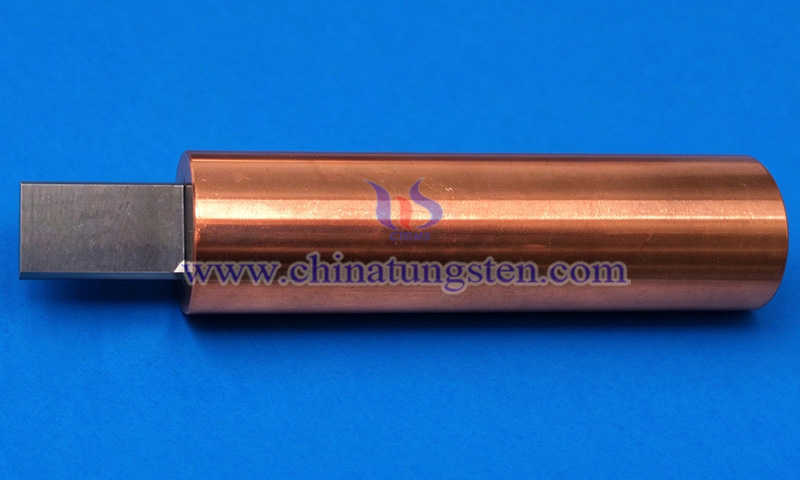
3. Applications of CTIA's Copper-Embedded Tungsten Electrode
(1) EDM Precision Mold Machining: Used for cavities, narrow slots, and complex profiles in precision injection molds, stamping dies, and cemented carbide molds, ideal for finishing operations demanding low electrode wear and high machining details.
(2) Resistance Spot and Projection Welding: Used in spot and projection welding equipment for automotive components, metal sheets, and hardware products, including applications involving stainless steel, and coated steel sheets.
(3) Projection Welding Dies and Welding Fixtures: Used in projection welding dies for metal fasteners such as nuts and bolts, as well as localized working ends in welding fixtures, where concentrated current transfer, localized heat resistance, and wear resistance are required.
(4) High-Voltage Switches and Discharge Tubes: Used in high-voltage switch contacts, arcing contacts, and gas discharge tube electrodes, particularly in areas exposed to arc impact and requiring a combination of electrical conductivity, heat dissipation, and arc erosion resistance.
4. Specifications of CTIA's Copper-Embedded Tungsten Electrode
(1) Copper Shank: Pure copper, CuCrZr, alumina copper, etc.
(2) Tungsten Tip: Pure tungsten, tungsten-lanthanum alloy, etc.
(3) Forms: Round rods, plates, and assembled electrodes.
(4) Dimensions and Tolerances: Customizable.
CTIA GROUP (CTIA) has nearly 30 years of experience in tungsten copper alloy manufacturing, with extensive expertise in powder metallurgy and precision machining. Based on electrode applications and structural requirements, CTIA provides material selection, structural design, dimensional customization, and machining solutions for copper-embedded tungsten electrodes.
For any inquiry, please contact tungsten copper manufacturer: CTIA GROUP
Email: sales@chinatungsten.com
Tel: 0086 592 5129696 / 0086 592 5129595
Website: tungsten-copper.com
WeChat: