Electrical Discharge Tungsten Copper Electrode
1.What's Electrical Discharge Tungsten Copper Electrode?
Electrical discharge tungsten copper electrode is tool electrode composed of tungsten copper composite, mainly used in Electrical Discharge Machining (EDM), where high temperatures generated by pulsed discharges between the electrode and the conductive workpiece gradually erode the workpiece material to create holes, grooves, precision cavities, and complex contours. CTIA's EDM tungsten copper electrode combines tungsten's high melting point and excellent electrical erosion resistance with copper's superior electrical and thermal conductivity, helping reduce electrode wear and preserve contour accuracy, making it suitable for precision EDM of cemented carbide and superalloy workpieces as well as precision molds.
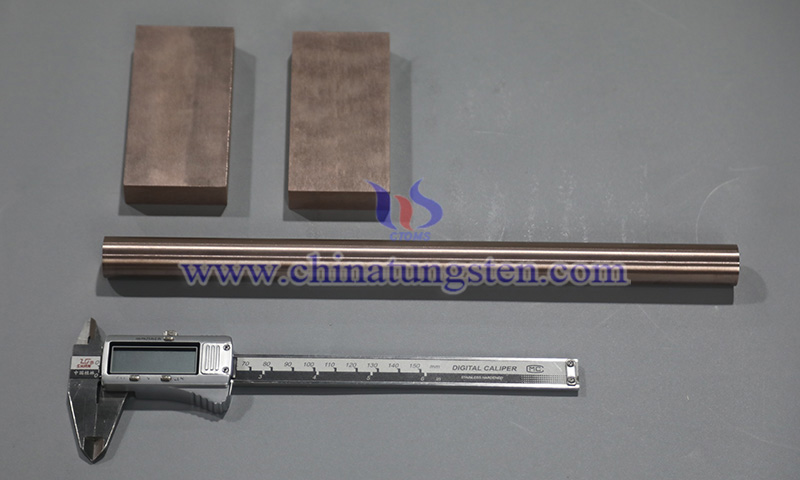
2.Features of CTIA's Electrical Discharge Tungsten Copper Electrode
(1) Good Electrical Erosion Resistance: Tungsten has relatively high melting point, helping reduce electrode wear during discharge and maintain sharp corners, narrow slots and complex contours.
(2) Good Electrical and Thermal Conductivity: Copper helps conduct discharge current and diffuse heat, meeting the needs of EDM.
(3) Discharge Stability: The tungsten phase and copper phase are uniformly distributed, helping maintain consistency of electrode surface electrical and thermal conductivity and reduce local overheating and uneven wear.
(4) Suitable for Precision Machining: When electrode wear is relatively low, it helps control cavity dimension and contour deviation, suitable for processes with higher machining accuracy requirements.
(5) Matching Machining Performance: Electrode wear and workpiece surface quality are related to workpiece material, discharge parameters and working fluid, etc.
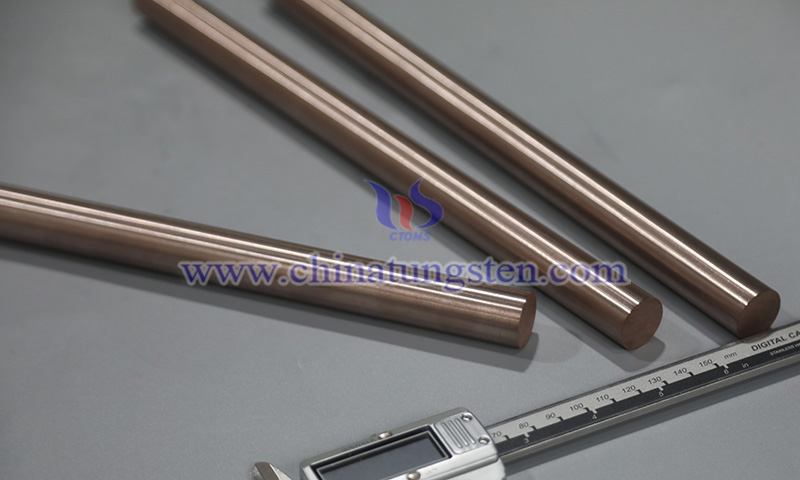
3.Applications of CTIA's Electrical Discharge Tungsten Copper Electrode
(1) Cemented Carbide Machining: Used for complex contour and fine structure machining of cemented carbide molds, wear-resistant parts and forming tools.
(2) Precision Mold Machining: Used for cavity, sharp corner, narrow slot and deep cavity machining of injection molds, stamping molds, etc., helping control contour deviation caused by electrode wear.
(3) Micro Hole and Deep Hole Machining: Used for small hole and deep hole machining on precision parts and molds; can be combined with electrode rotation or vibration assistance to improve chip removal.
(4) Aerospace Part Machining: Used for complex structure machining of difficult-to-machine conductive materials such as titanium alloy and nickel-based superalloy.
(5) Additive Manufacturing Part Machining: Used for local EDM of metal additive manufacturing parts to handle fine structures and complex contours.
4.Specifications of CTIA's Electrical Discharge Tungsten Copper Electrode
(1) Material Composition: W70Cu30, W75Cu25, W80Cu20, W85Cu15, etc.
(2) Shape: Round rod, square rod, block, tube and special-shaped structure
(3) Dimension & Tolerance: Customizable
(4) Surface Requirement: Customized based on application requirement
CTIA has focused on tungsten-copper alloys for nearly 30 years, with experience in powder metallurgy and precision machining, and can provide material selection, structural design, dimension customization and machining services for tungsten copper electrode according to workpiece material, machining shape and dimensional accuracy requirements.
For any inquiry, please contact tungsten copper manufacturer: CTIA GROUP
Email: sales@chinatungsten.com
Tel: 0086 592 5129696 / 0086 592 5129595
Website: tungsten-copper.com
WeChat: