Tungsten Copper Nozzle Throat Liner
1. What's Tungsten Copper Nozzle Throat Liner?
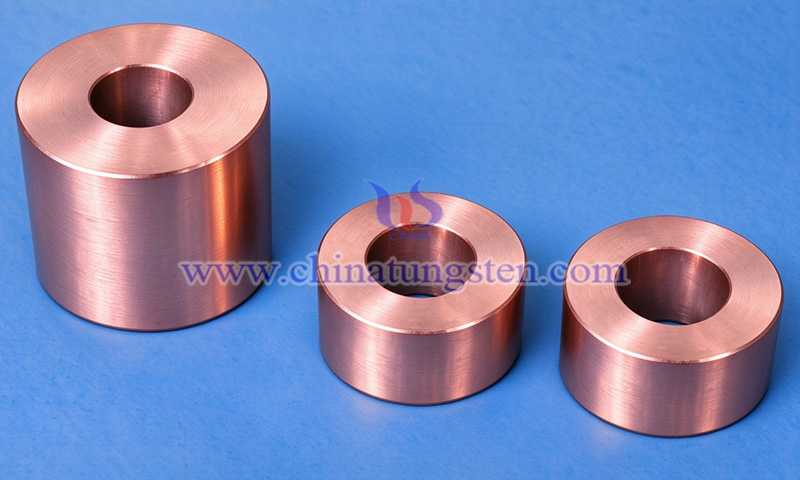
Tungsten copper nozzle throat liner is high-temperature-resistant liner installed in the throat of rocket engine nozzles. The nozzle throat is the narrowest section of the gas flow passage and is exposed to high-temperature gas flow, thermochemical erosion, and intense heat flux during operation. Its resistance to ablation, thermal conductivity, and ability to withstand thermal stress directly affect the stability of the throat profile.
CTIA's tungsten copper nozzle throat liners are manufactured by infiltrating porous tungsten skeleton with molten copper. The tungsten skeleton provides high-temperature strength and ablation resistance, while the copper phase improves thermal conductivity, helping reduce throat erosion and localized heat buildup. Under certain operating conditions, copper migration and phase changes may also produce sweating cooling effect.
2. Features of CTIA's Tungsten Copper Nozzle Throat Liner
(1) High-Temperature Resistance, Ablation Resistance: Tungsten skeleton helps withstand high-temperature gas scouring and slows material ablation and throat-contour change.
(2) Good Thermal Conductivity, Heat Dispersion: Copper phase helps conduct concentrated heat at the throat into the material interior and surrounding structures, reducing local heat accumulation.
(3) Sweat Cooling, Thermal-Load Relief: At high temperature the copper phase may migrate toward the heated surface and undergo phase change, absorbing heat and removing part of the heat through gas-phase action to slow local ablation.
(4) Erosion Resistance, Reduced Material Loss: Tungsten-infiltrated-copper structure helps reduce throat-liner loss caused by high-temperature gas and particle scouring.
(5) Thermal-Shock Resistance, Lower Cracking Risk: Properly designed material microstructure and wall thickness can mitigate thermal stresses caused by rapid temperature changes, thereby reducing the risk of cracking.
(6) Precise Dimensions, Customization Support: Inner bore, outer diameter, wall thickness and fit dimensions can be customized according to nozzle structure to meet throat-liner assembly requirements.
3. Applications of CTIA's Tungsten Copper Nozzle Throat Liner
(1) Hybrid Rocket Motors: Used at the nozzle throat of engines to slow material loss caused by high-temperature gas scouring and particle erosion, maintaining throat flow-path shape.
(2) Solid Rocket Motors: Serves as nozzle-throat insert, working together with carbon-based materials and thermal-insulation structures to withstand local high thermal load and reduce impact of throat ablation on nozzle performance.
(3) Attitude-Control Thrusters: Used at the nozzle throat of rocket attitude-control thrusters, adapting to short-duration or repeated high-temperature gas environments and controlling throat dimensional change.
4. Specifications of CTIA's Tungsten Copper Nozzle Throat Liner
(1) Material and Density: Tungsten-skeleton copper-infiltrated material; density determined by material ratio
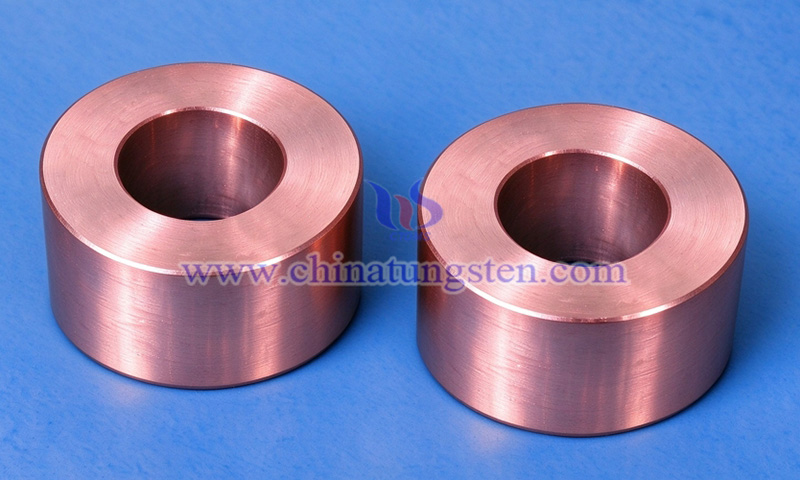
(2) Structural Form: Annular, cylindrical and special-shaped structures
(3) Dimension and Tolerance: Inner diameter, outer diameter, wall thickness and machining tolerances customized according to nozzle design
CTIA GROUP has been specializing in tungsten copper alloy manufacturing for nearly 30 years and possesses extensive experience in powder metallurgy and precision machining. CTIA customizes tungsten copper nozzle throat liners by adjusting material composition, structure, and dimensions to meet specific nozzle throat geometries, thermal loads, and operating conditions.
For any inquiry, please contact tungsten copper manufacturer: CTIA GROUP
Email: sales@chinatungsten.com
Tel: 0086 592 5129696 / 0086 592 5129595
Website: tungsten-copper.com
WeChat: