Tungsten Copper Conductive Nozzle
1. What's Tungsten Copper Conductive Nozzle?
Tungsten copper conductive nozzle is welding conductive component made of tungsten-copper composite material, primarily used to transmit welding current to welding wire and guide welding wire through guide hole. CTIA's tungsten copper conductive nozzle combines high hardness and wear resistance of tungsten with electrical and thermal conductivity of copper, helping maintain smooth wire feeding and stable current transmission, suitable for welding scenarios requiring high wear resistance and operational stability.
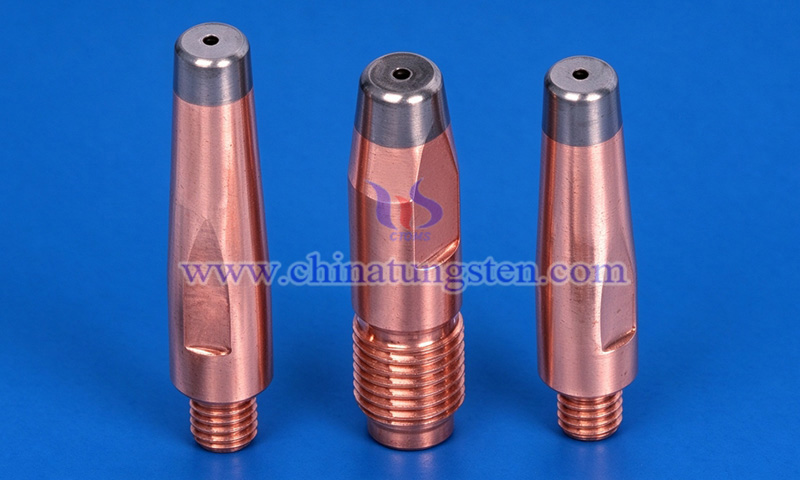
2. Characteristics of CTIA's Tungsten Copper Conductive Nozzle
(1) Good Electrical Conductivity: Copper phase provides a conductive path for welding current. Appropriate material composition and contact design help control contact resistance and localized heating.
(2) Good Thermal Conductivity: Tungsten copper material conducts heat generated during welding, helping control localized temperature rise in conductive nozzle.
(3) Wear Resistance: Tungsten phase helps increase material hardness and wear resistance, slowing wear caused by continuous passage of welding wire through guide hole, maintaining stability of hole diameter and wire feeding fit.
(4) Arc Erosion Resistance: Tungsten has high melting point, making tungsten copper composite suitable for selected operating conditions involving high thermal loads or risk of arc erosion.
(5) High-Temperature Resistance: Tungsten copper combines high melting point of tungsten with thermal conductivity of copper. Suitable material composition can be selected according to operating temperature and thermal load.
(6) Flexible Structural Design: Guide hole diameter, product length, outer diameter, end shape, and mounting interface can be customized to suit different welding systems.
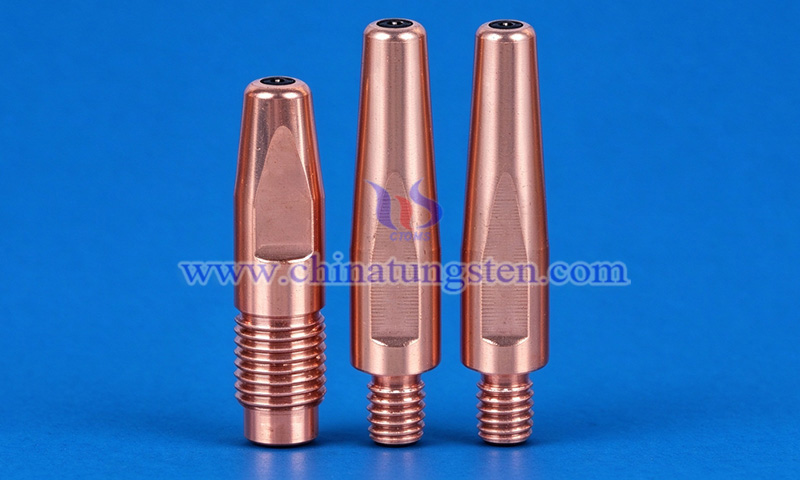
3. Applications of CTIA's Tungsten Copper Conductive Nozzle
(1) High-Current Welding: Used in high-current applications such as thick-plate welding and heavy steel structure welding, helping reduce overheating and erosion at conductive contact areas and improve stability during continuous welding.
(2) Automated and Robotic Welding: Used in continuous wire feeding scenarios such as automotive body welding, construction machinery welding, and automated production lines, slowing guide hole wear, extending conductive nozzle service life, and reducing replacement frequency.
(3) Submerged Arc Welding (SAW): Used for welding pressure vessels, ship plates, and large steel structures, helping reduce wear at conductive areas under high thermal loads and maintain welding stability.
(4) Gas Metal Arc Welding (GMAW): Used in metal structure fabrication, pipeline welding, and automated gas-shielded welding lines, helping reduce nozzle wear and deterioration of electrical contact performance to maintain stable wire feeding and current transmission.
(5) Specialized Welding Equipment: Used in wear-resistant hardfacing, dedicated automatic welding equipment, and other specialized welding systems to reduce conductive component wear and maintenance or replacement requirements.
4. Specifications of CTIA's Tungsten Copper Conductive Nozzle
(1) Material Compositions: W70Cu30, W80Cu20, W90Cu10, etc.
(2) Structural Features: Guide hole, tip shape, and mounting interface, customizable
(3) Dimensions and Tolerances: Customized to requirements
Backed by nearly 30 years of powder metallurgy and precision machining expertise in tungsten-copper alloy manufacturing, CTIA GROUP provides comprehensive material selection, structural design, dimension customization, and machining services for tungsten copper conductive nozzles based on welding processes, current conditions, wire specifications, and equipment interface requirements, meeting demanding electrical performance, wear resistance, and precision standards across diverse welding applications.
For any inquiry, please contact tungsten copper manufacturer: CTIA GROUP
Email: sales@chinatungsten.com
Tel: 0086 592 5129696 / 0086 592 5129595
Website: tungsten-copper.com
WeChat: