Tungsten Copper Discharge Electrode
1. What's Tungsten Copper Discharge Electrode?
Tungsten copper discharge electrode is a composite material electrode used in Electrical Discharge Machining (EDM), primarily for machining molds, cemented carbide, and precision components. CTIA's tungsten copper discharge electrode combines tungsten's high melting point with copper's electrical and thermal conductivity to remove workpiece material through pulsed electrical discharge, offering controlled electrode wear, machining precision, and good surface quality.
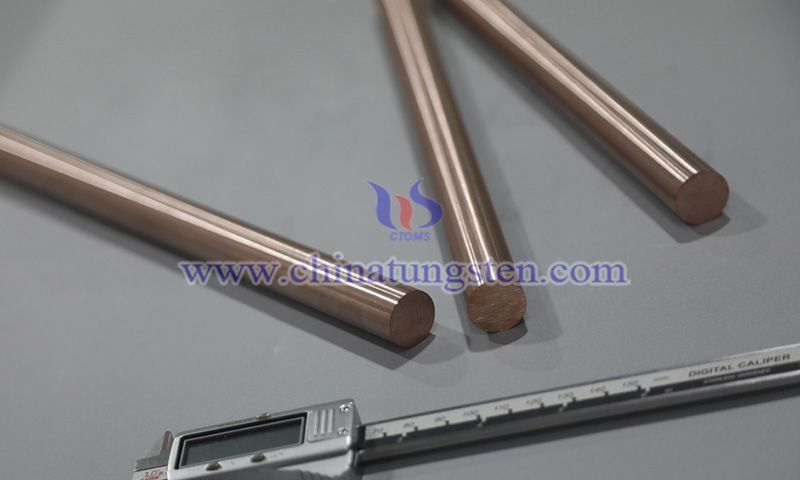
2. Characteristics of CTIA's Tungsten Copper Discharge Electrode
(1) Good Electrical and Thermal Conductivity: The copper phase helps conduct current and dissipate heat. W70Cu30 typically has an electrical conductivity of approximately 42% IACS, while W80Cu20 is approximately 34% IACS. Higher copper content generally improves electrical and thermal conductivity, with the appropriate composition depending on machining requirements.
(2) High-Temperature Resistance and Electrical Erosion Resistance: Tungsten has a melting point of approximately 3,422°C, helping improve heat resistance and resistance to electrical discharge erosion. Actual electrode wear also depends on discharge parameters, workpiece material, and machining conditions.
(3) High Hardness and Wear Resistance: The Brinell hardness of W70Cu30 is approximately 175 HB, and W80Cu20 is about 220 HB. Higher hardness helps maintain electrode shape and dimensions, though electrode wear must still be evaluated based on specific discharge conditions.
(4) High Density and Dimensional Stability: W70Cu30 has a density of approximately 13.8 g/cm³, while W80Cu20 is approximately 15.15 g/cm³. Tungsten copper materials are suitable for precision-profile electrodes used to machine cemented carbide cavities, narrow grooves, and complex structures.
(5) Flexible Composition and Adjustable Performance: Tungsten-to-copper ratios affect electrical conductivity, hardness, and density. W70Cu30 offers relatively higher conductivity, while W80Cu20 provides relatively higher hardness and density. The appropriate composition can be selected according to workpiece material, machining accuracy, and discharge conditions.
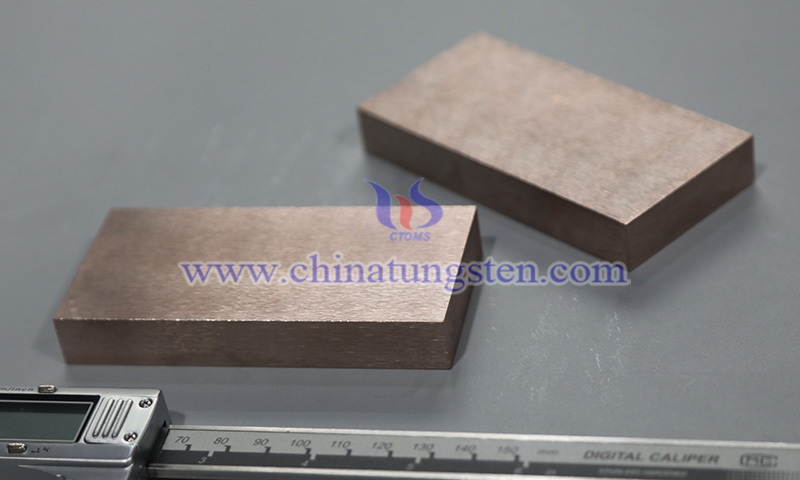
3. Types of CTIA's Tungsten Copper Discharge Electrode
(1) Block Discharge Electrode: Generally block-shaped or square, with working ends machined into specific contours, suitable for mold cavities, grooves, and complex shape machining.
(2) Rod Discharge Electrode: Cylindrical or slender in shape, designed according to diameter, length, and end structure for EDM of specific holes, slots, and localized structures.
(3) Sheet Discharge Electrode: Features a relatively thin cross-section, suitable for narrow slots, fine gaps, and specific thin-walled contour machining, requiring consideration of electrode thickness and machining accuracy during design.
(4) Threaded Discharge Electrode: The working end is machined with corresponding thread profiles, used for thread EDM in hard-to-machine materials like cemented carbide. The electrode pitch, diameter, and length must match the target thread and machining equipment.
(5) Special-Shaped Discharge Electrode: Machined into non-standard shapes according to special workpiece contours, suitable for complex cavities, special curved surfaces, and other machining tasks with specific geometric structures.
4. Applications of CTIA's Tungsten Copper Discharge Electrode
(1) Mold Manufacturing: Used to machine cavities, narrow grooves, sharp corners, and complex profiles in injection molds, die-casting molds, and stamping molds, including molds for automotive parts, electronic connectors, and precision forming.
(2) Cemented Carbide Machining: Used for EDM of cemented carbide molds, wire-drawing dies, stamping dies, and wear-resistant components, particularly for fine grooves, complex cavities, and special profiles.
(3) Precision Component Machining: Used to machine precision conductive components in mechanical, electronic, aerospace, and medical equipment, including small holes, grooves, complex surfaces, and localized features.
(4) Complex Structure Machining: Used for deep and narrow grooves, sharp corners, fine profiles, and other features difficult to produce by conventional cutting. Electrode material and geometry should be selected according to workpiece material, machining accuracy, and discharge conditions.
5. Specifications of CTIA's Tungsten Copper Discharge Electrode
(1) Common composition: W70Cu30, W75Cu25, W80Cu20, W85Cu15, W90Cu10, etc.
(2) Shape & Dimensions: Block, rod, plate, customizable.
(3) Dimensions & Tolerances: Customizable to customer requirements.
Backed by nearly 30 years of powder metallurgy and precision machining expertise in tungsten copper alloy manufacturing, CTIA GROUP provides material selection, structural design, dimensional customization, and machining solutions for tungsten copper discharge electrodes based on workpiece materials, machining accuracy, and electrode wear requirements, suitable for EDM applications involving mold cavities, cemented carbide, and precision parts.
For any inquiry, please contact tungsten copper manufacturer: CTIA GROUP
Email: sales@chinatungsten.com
Tel: 0086 592 5129696 / 0086 592 5129595
Website: tungsten-copper.com
WeChat: