Tungsten Copper Fixed Arcing Contact
1. What's Tungsten Copper Fixed Arcing Contact?
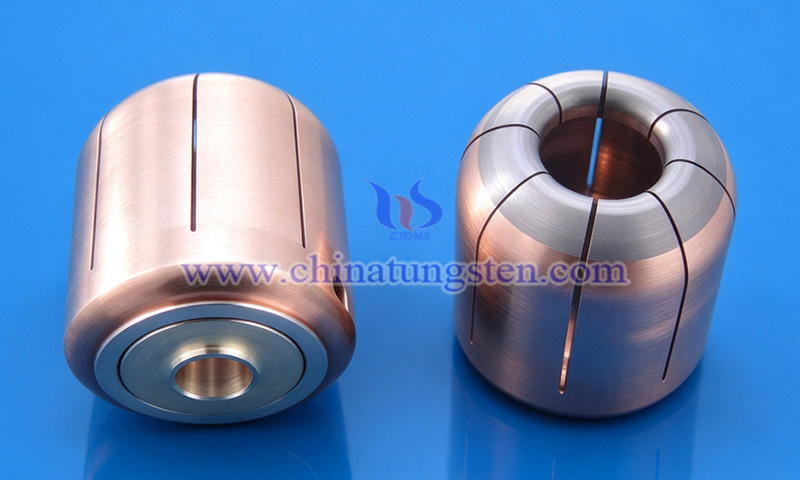
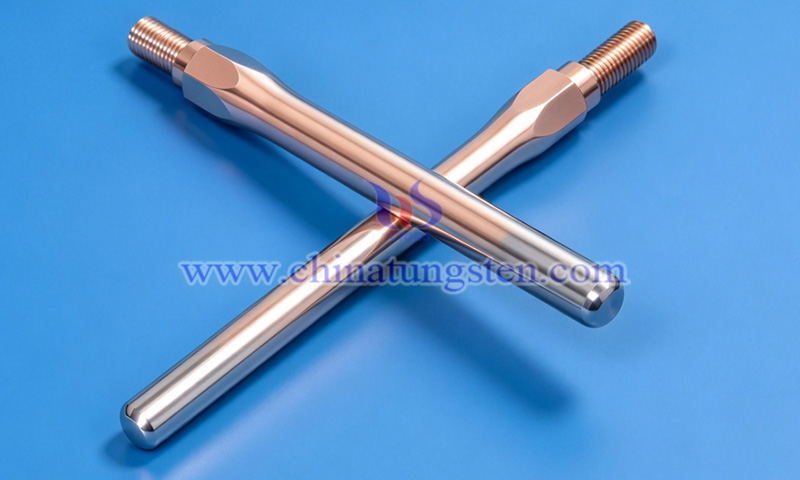
Tungsten copper fixed arcing contact is the stationary arcing contact installed in the arc-extinguishing chamber of a high-voltage circuit breaker. It works together with the moving arcing contact to interrupt current. During opening, the moving arcing contact withdraws from the fixed arcing contact, and the resulting arc causes erosion at the tip of the fixed contact. During closing, the moving arcing contact engages again, causing contact and sliding wear. CTIA's tungsten copper fixed arcing contacts combine tungsten's resistance to arc erosion with copper's electrical and thermal conductivity, helping reduce contact wear and maintain tip geometry and proper contact fit.
2. Characteristics of CTIA's Tungsten Copper Fixed Arcing Contact
(1) Arc Erosion Resistance: Tungsten phase helps reduce melting loss and material spatter caused by electrical arcs, lowering risk of fixed arcing contact tip pointing and contact stroke shortening.
(2) Electrical Conductivity and Heat Dissipation: Copper phase helps conduct current and dissipate heat, reducing localized heat buildup.
(3) Maintenance of Tip Shape: Repeated interruption may gradually sharpen fixed arcing contact tip, altering contact position and effective stroke between moving and fixed contacts.
(4) Reduction of Surface Damage: Arc ablation may cause annular damage, surface roughness, and cracks, while subsequent contact further intensifies mechanical wear.
(5) Reliable Joint Strength: For composite fixed arcing contacts, the bond between the tungsten copper contact and conductive base requires careful consideration to minimize joint defects that could affect electrical conductivity and interruption performance.
3. Applications of CTIA's Tungsten Copper Fixed Arcing Contact
(1) High- and Extra-High-Voltage Circuit Breakers: Used as fixed-side arcing contacts that work with moving arcing contacts to interrupt current, helping reduce arc erosion and maintain effective contact travel.
(2) GIS Circuit Breakers: Used on the fixed side of the arc-extinguishing chamber, requiring arc erosion resistance, stable tip dimensions, and reliable bonding to the conductive base.
(3) Capacitor Bank Switching Circuit Breakers: Withstands prestrike arc erosion and mechanical wear caused by the insertion of moving arcing contacts. Tip wear and changes in contact travel are important factors in service life evaluation.
(4) High-Voltage DC High-Speed Switches: ±800 kV DC high-speed switch designs use a CuW70 fixed arcing contact paired with a CuW80 moving arcing contact to meet the different operating requirements of each contact.
4. Specifications of CTIA's Tungsten Copper Fixed Arcing Contact
(1) Common Material: CuW70, CuW75, CuW80, CuW85, etc.
(2) Structural Type: Plug-in, finger-type, and composite structures, designed according to the arc-extinguishing chamber configuration.
(3) Dimensions and Tolerances: Customizable.
CTIA GROUP has nearly 30 years of experience manufacturing tungsten copper alloys, with extensive expertise in powder metallurgy, copper infiltration, and precision machining. CTIA provides customized solutions based on circuit breaker type, operating conditions, and contact assembly requirements, covering tungsten-to-copper ratio selection, contact structure design, dimensional customization, and precision machining to meet requirements for arc erosion resistance, electrical and thermal conductivity, contact fit, and assembly accuracy.
For any inquiry, please contact tungsten copper manufacturer: CTIA GROUP
Email: sales@chinatungsten.com
Tel: 0086 592 5129696 / 0086 592 5129595
Website: tungsten-copper.com
WeChat: