Tungsten Copper Conductive Block
1. What's Tungsten Copper Conductive Block?
Tungsten copper conductive block, also known as tungsten copper composite electrode, is a composite conductive contact used in conductive wheels of barrel plating equipment. CTIA's tungsten copper conductive block features a composite structure combining a copper base or copper conductive layer with a wear-resistant tungsten copper contact surface. The copper base carries electrical current, while the tungsten copper contact surface withstands contact friction, wear, and arc erosion. The electrode contacts a conductive ring or shaft and transfers current to workpieces inside the rotating barrel. Material combination, contact pressure, and structural design all affect electrical stability, heat generation, and service life.
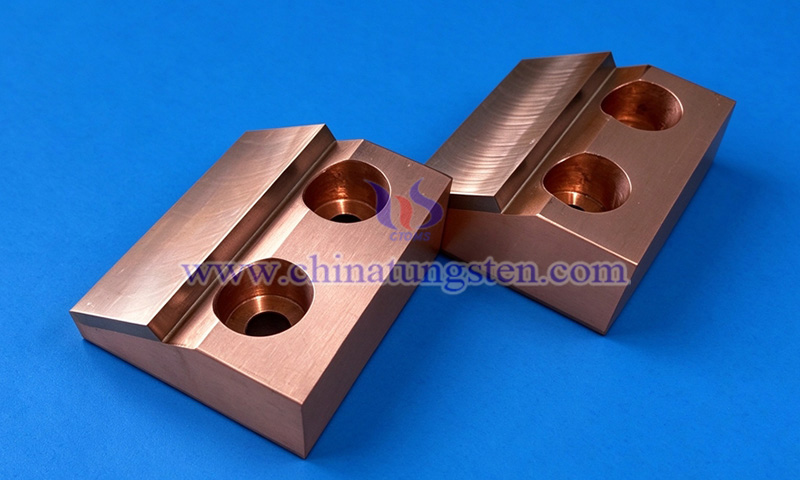
2. Characteristics of CTIA's Tungsten Copper Conductive Block
(1) Stable Electrical Conductivity: Copper base provides a conductive path for efficient current transmission.
(2) Good Wear Resistance: Tungsten copper contact surface withstands friction and wear caused by continuous contact. Tungsten content, material density, and manufacturing processes affect hardness and wear resistance.
(3) Arc Erosion Resistance: Conductive contact area may generate sparks due to unstable contact, causing localized erosion. Tungsten-copper material has good arc erosion resistance, suitable for conductive positions with such risks.
(4) Service Life Affected by Operating Conditions: Actual service life depends on operating current, contact pressure, equipment speed, heat dissipation, and maintenance. Even with wear-resistant materials, wear rates and replacement intervals must be assessed according to operating conditions.
(5) Flexible Composite Structure Design: Different equipment has varying requirements for installation methods and structural dimensions of conductive blocks. CTIA customizes overall dimensions, copper matrix structures, and tungsten-copper working surfaces according to installation requirements and service conditions.
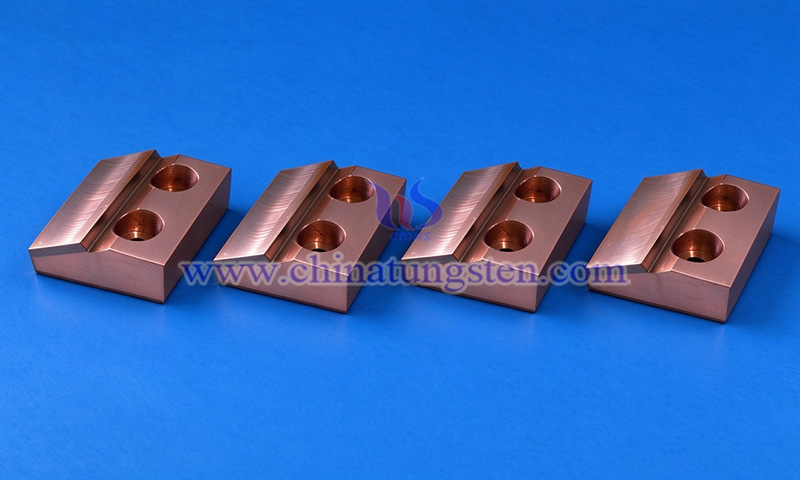
3. Applications of CTIA's Tungsten Copper Conductive Block
(1) Conductive Wheels in Barrel Plating Equipment: Transfers current between conductive wheels and conductive rings or shafts, delivering current to workpieces inside the rotating barrel while withstanding contact friction during operation.
(2) Continuous Electroplating and Surface Treatment Equipment: Used in rotating conductive components of selected equipment to transmit current while resisting contact wear. Structure must match the equipment's current transfer method and installation requirements.
(3) Copper Foil Raw Machine (Forming Machine): Used in conductive structures at cathode end of raw foil machines, contacting conductive rings to transmit current, meeting conductivity and wear resistance requirements during rotating contact.
4. Specifications of CTIA's Tungsten Copper Conductive Block
(1) Common Material Grades: CuW70, CuW75, and CuW80.
(2) Dimensions and Tolerances: Customized to customer requirements.
Higher tungsten content generally increases hardness and wear resistance but reduces electrical conductivity. Material selection depends on wear conditions and conductivity requirements. Contact pressure, operating current, and heat dissipation should also be considered to ensure reliable performance under specific operating conditions.
CTIA GROUP has nearly 30 years of experience in tungsten copper alloy manufacturing, with extensive expertise in powder metallurgy and precision machining. CTIA provides design and customization services for tungsten copper conductive blocks based on equipment structure, electrical requirements, and wear conditions, optimizing the fit between copper base and tungsten copper contact surface to meet conductivity, wear resistance, and installation requirements under different operating conditions.
For any inquiry, please contact tungsten copper manufacturer: CTIA GROUP
Email: sales@chinatungsten.com
Tel: 0086 592 5129696 / 0086 592 5129595
Website: tungsten-copper.com
WeChat: