Tungsten Copper Alloy in Power Equipment
Tungsten copper alloy is composite material produced by powder metallurgy infiltration process and is mainly used in power equipment as electrical contact material resistant to arc erosion and as a key conductive component. CTIA's tungsten copper alloy uses tungsten to provide high melting point and good arc ablation resistance, while copper ensures superior electrical and thermal conductivity. It is widely used in power equipment such as high-voltage switch, circuit breaker and load switch, helping reduce contact loss, improve breaking reliability and extend service life.
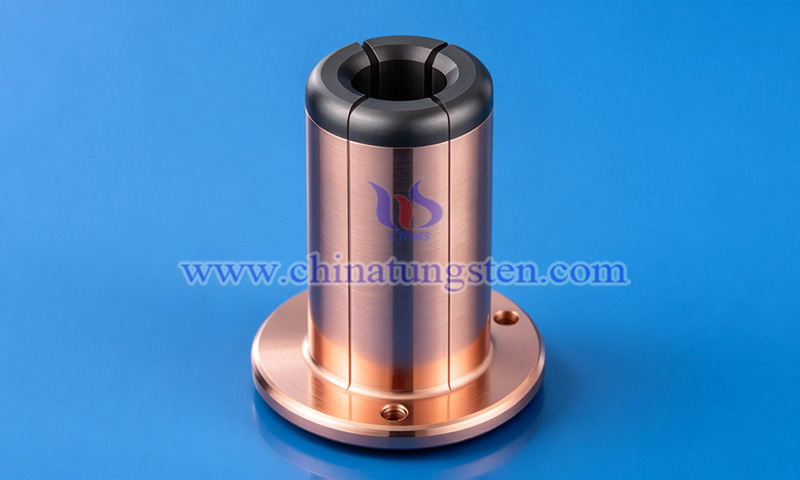
1. Features of CTIA's Tungsten Copper Alloy in Power Equipment
(1) High Melting Point and Arc Ablation Resistance: Tungsten phase has high melting point and can resist arc erosion during breaking, reducing contact material loss.
(2) Resistance to Welding and Reliable Breaking: Tungsten phase helps reduce risk of molten metal adhesion on contact surface and improves contact separation performance under high-current breaking condition.
(3) Electrical and Thermal Conductivity and Controllable Temperature Rise: Copper phase facilitates current transmission and heat diffusion, reducing local overheating of contact.
(4) High Strength and Impact Resistance: Tungsten skeleton provides relatively high strength, withstanding the mechanical shocks and thermal shocks from arcing caused by repeated switching operations.
(5) Low Thermal Expansion and Dimensional Stability: Tungsten-copper composite structure has relatively low coefficient of thermal expansion, helping maintain contact fitting accuracy.
(6) Flexible Composition and Adjustable Performance: Tungsten-copper ratio can be selected according to voltage level, breaking current, contact resistance and working environment to balance electrical conductivity and arc ablation resistance.
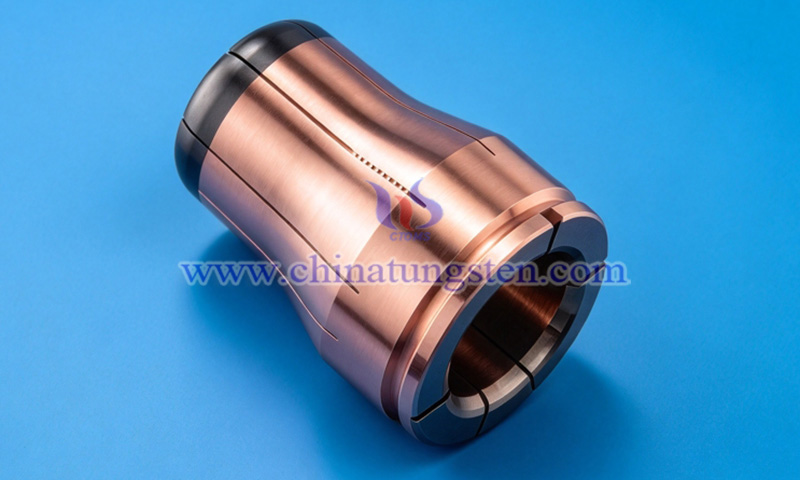
2. Applications of CTIA's Tungsten Copper Alloy in Power Equipment
(1) High-Voltage and Ultra-High-Voltage Circuit Breaker: Used for arc-resistant part such as moving arc contact and fixed arc contact of circuit breaker, withstanding strong arc impact during high-voltage breaking and maintaining stable contact shape and breaking performance.
(2) SF₆ Circuit Breaker: Used for arc contact of Sulfur Hexafluoride (SF₆) circuit breaker, balancing current conduction and arc withstand capability and meeting contact reliability requirement during high-voltage breaking.
(3) Vacuum Circuit Breaker: Used for specific contact or composite contact part of vacuum interrupter, reducing contact welding risk and improving contact separation performance after high-current breaking.
(4) Load Switch and Disconnector: Used for arc contact or ablation-resistant part of switch, withstanding arc action during load switching and helping maintain contact state and opening/closing performance.
(5) Transformer On-Load Tap Changer: Used for switching contact or arc-resistant part, adapting to electrical and thermal load during on-load switching and maintaining contact conductivity and switching reliability.
3. Specifications of CTIA's Tungsten Copper Alloy in Power Equipment
(1) Common Material: CuW70, CuW75, CuW80, CuW85, CuW90, etc.
(2) Product Form: Arc contact, protection ring, contact insert and other special-shaped electrical contact part
(3) Dimension and Tolerance: Customizable
With nearly 30 years of focus on tungsten copper alloys and extensive experience in powder metallurgy and precision machining, CTIA can provide tungsten-copper alloy material selection, structural design, and customized machining services based on the voltage level, breaking current, contact structure, and working conditions of power equipment.
For any inquiry, please contact tungsten copper manufacturer: CTIA GROUP
Email: sales@chinatungsten.com
Tel: 0086 592 5129696 / 0086 592 5129595
Website: tungsten-copper.com
WeChat: