Tungsten Copper Seam Welding Wheel
1. What's Tungsten Copper Seam Welding Wheel?
Tungsten copper seam welding wheel is a wheel-shaped electrode installed on a seam welding machine that makes rolling contact with workpieces and conducts welding current to form continuous or intermittent weld seams through overlapping weld nuggets. CTIA's tungsten copper seam welding wheels offer good resistance to sticking, wear and high temperatures, as well as good electrical conductivity, helping reduce material buildup and working-surface wear while maintaining stable wheel-rim profiles and consistent weld quality.
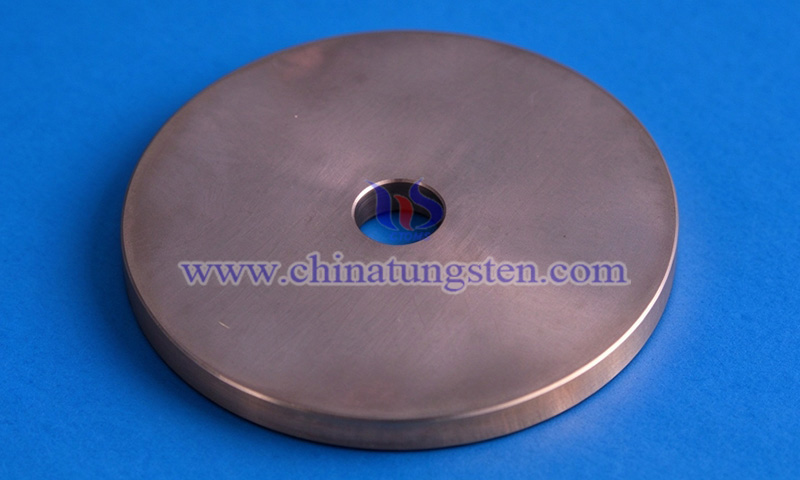
2. Characteristics of CTIA's Tungsten Copper Seam Welding Wheel
(1) Excellent Resistance to Sticking: Tungsten copper working surfaces help reduce material pickup when welding stainless steel, coated sheet metal, and non-ferrous metals, resulting in less buildup and easier routine cleaning.
(2) High-temperature resistance and anti-deformation: Retains hardness and shape at elevated welding temperatures, helping prevent wheel rims from flattening, softening, or wearing rapidly and maintaining reliable contact with workpieces.
(3) Wear Resistance and Electrical Conductivity: Tungsten copper combines wear resistance, arc erosion resistance, and good electrical and thermal conductivity. Both integral and insert-type welding wheels are durable.
(4) Stable Wheel-Rim Profile for Consistent Welds: Accurate wheel-rim geometry and surface finish help maintain uniform pressure and current distribution, improving weld consistency and reducing quality variations.
(5) Suitable for Seam Welding of Special Materials: Tungsten copper is suitable for applications with demanding requirements for resistance to sticking, wear, and high temperatures, such as welding stainless steel mesh and non-ferrous metal strips.
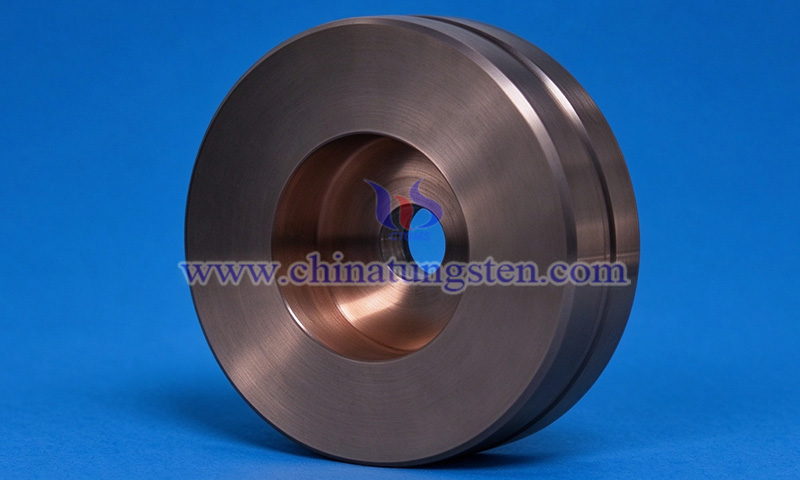
3. Applications of CTIA's Tungsten Copper Seam Welding Wheel
(1) Tinplate and Metal Can Seam Welding: Used for welding can bodies in metal packaging, including food cans and beverage cans, meeting requirements for continuous weld seams and sealing performance.
(2) Stainless Steel Mesh and Metal Wire Mesh Welding: Used for roller seam welding of stainless steel mesh, iron wire mesh, and similar materials. Tungsten copper working surfaces help reduce material pickup during welding.
(3) Non-Ferrous Metal Strip Seam Welding: Used for continuous welding of thin copper, aluminum, and silver strips. Suitable tungsten-to-copper ratio selected according to material and thickness.
(4) Thin-Walled Stainless Steel Product Welding: Used for circumferential seam welding of thin-walled stainless steel products, such as vacuum flasks and cookware, reducing sticking and grinding frequency.
(5) Automotive Sheet Metal and Connector Welding: Used in resistance seam welding applications involving automotive sheet metal lap joints, battery tabs, and metal connecting pieces.
4. Specifications of CTIA's Tungsten Copper Seam Welding Wheel
(1) Common Materials: CuW55, CuW75, CuW80, etc.
(2) Custom Dimensions: Outer diameter, inner diameter, thickness, and wheel-rim profile can be customized to match equipment interfaces and welding requirements.
CTIA GROUP has nearly 30 years of experience in tungsten copper alloy manufacturing, with expertise in powder metallurgy, copper infiltration, and precision machining. CTIA provides material selection, structural optimization, dimensional customization, and finished-part machining based on workpiece materials, sheet thickness, welding parameters, and equipment interfaces.
For any inquiry, please contact tungsten copper manufacturer: CTIA GROUP
Email: sales@chinatungsten.com
Tel: 0086 592 5129696 / 0086 592 5129595
Website: tungsten-copper.com
WeChat: