Tungsten Copper Ring Electrode
1. What's Tungsten Copper Ring Electrode?
Tungsten copper ring electrode is high-precision discharge and contact component featuring hollow ring or annular disc structures. Combining tungsten's high melting point and arc erosion resistance with copper's electrical and thermal conductivity, CTIA's tungsten copper ring electrode utilizes its annular face or outer edge for EDM, resistance seam welding, and applications demanding superior heat resistance, conductivity, and profile stability.
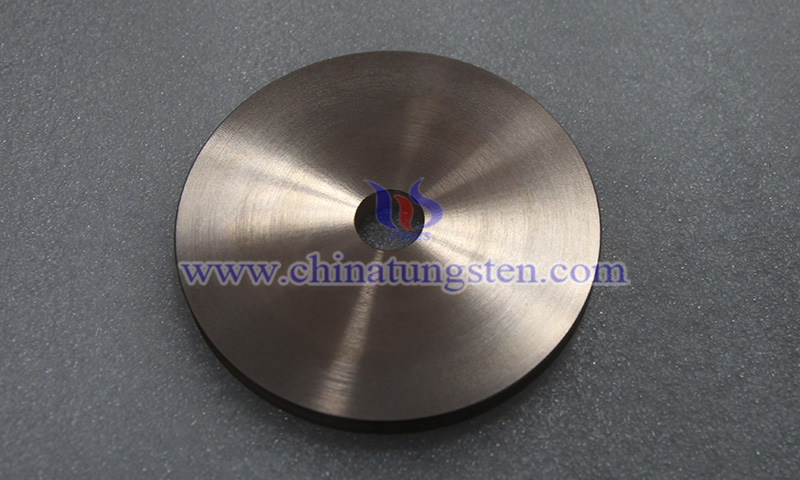
2. Characteristics of CTIA's Tungsten Copper Ring Electrode
(1) Annular Design for Circular Machining: The ring-shaped working surface is suitable for machining annular grooves, circular cavities, and rotational profiles, helping simplify tool positioning and machining.
(2) Rotational Use for Even Wear: Rotation helps distribute wear across the working surface of roller or disc electrodes, reducing localized wear and maintaining a consistent electrode profile.
(3) Good Electrical and Thermal Conductivity: The copper phase facilitates current transmission and heat dissipation, making the electrode suitable for continuous conduction and repeated discharge.
(4) High Resistance to Arc Erosion: Tungsten's high melting point helps resist arc erosion and reduce material loss during repeated electrical discharge.
(5) Flexible Structure for Installation: Center holes, mounting slots, and other fitting features can be customized to suit equipment requirements. Insert-ring designs are also available for installation on metal wheels or other substrates.
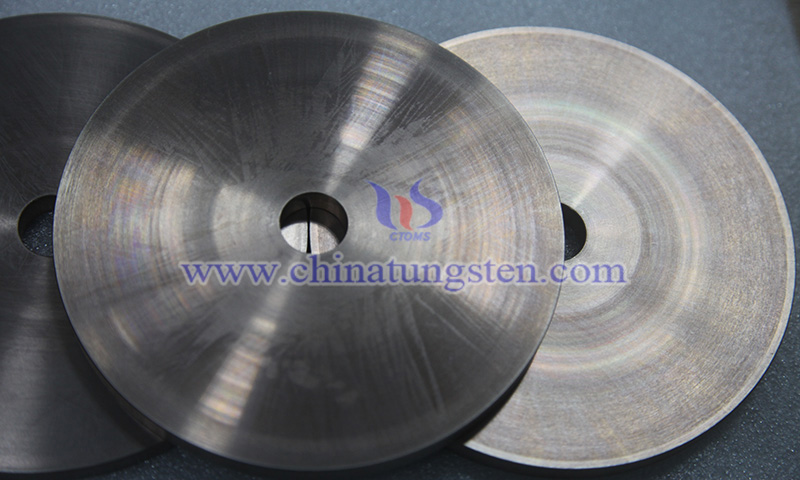
3. Applications of CTIA's Tungsten Copper Ring Electrode
(1) PCD and PCBN Tool Grinding: Used for edge forming, profile machining, and dressing of Polycrystalline Diamond (PCD) and Polycrystalline Cubic Boron Nitride (PCBN) cutting tools, meeting precision machining requirements for superhard materials.
(2) EDM of Annular Grooves: Used to machine annular grooves, circular cavities, and rotational profiles in cemented carbide molds and other difficult-to-machine materials, simplifying complex circular machining.
(3) Resistance Seam Welding: Used in thin-plate continuous seam welding equipment, transmitting welding current and applying pressure through rollers, suitable for welding scenarios such as tanks, radiators, and automotive sheet metal parts, helping enhance continuous welding efficiency.
(4) Switchgear Arcing Contacts: Used to arcing contacts or contact components in select medium- and high-voltage switchgear, enduring arc impacts during switch opening/closing processes and extending contact service life.
(5) Specialized Discharge Equipment: Used as annular conductive components in pulsed discharge devices, meeting pulse current transmission and transient thermal load requirements.
4. Specifications of CTIA's Tungsten Copper Ring Electrode
(1) Common materials: CuW70, CuW75, CuW80, etc.
(2) Dimensions: Outer diameter 50–200 mm, inner diameter 10–60 mm, thickness 4–40 mm; customizable.
(3) Dimensional tolerances: Inner diameter, outer diameter, thickness, and fitting tolerances machined to requirements.
(4) Surface finish: Turned, ground, or polished.
Backed by nearly 30 years of powder metallurgy and precision machining expertise in tungsten copper alloy manufacturing, CTIA GROUP provides material selection, structural design, and precision machining solutions tailored to operating conditions, equipment interfaces, and dimensional requirements of tungsten copper electrodes.
For any inquiry, please contact tungsten copper manufacturer: CTIA GROUP
Email: sales@chinatungsten.com
Tel: 0086 592 5129696 / 0086 592 5129595
Website: tungsten-copper.com
WeChat: