Tungsten Copper Rocket Engine Component
1. What's Tungsten Copper Rocket Engine Component?
Tungsten copper rocket engine component is high-temperature structural part produced using tungsten-copper composite material via powder metallurgy infiltration process. It is mainly used for hot-end part such as throat insert, nozzle, and jet vane of solid rocket engine. CTIA's tungsten copper rocket engine component uses tungsten to form high-melting-point skeleton and copper to provide high thermal conductivity and transpiration cooling. Under action of high-temperature gas flow, copper phase melts and evaporates, carrying away large amount of heat and effectively reducing component surface temperature, thus adapting to extreme condition of high temperature, high pressure, and high-speed particle erosion.
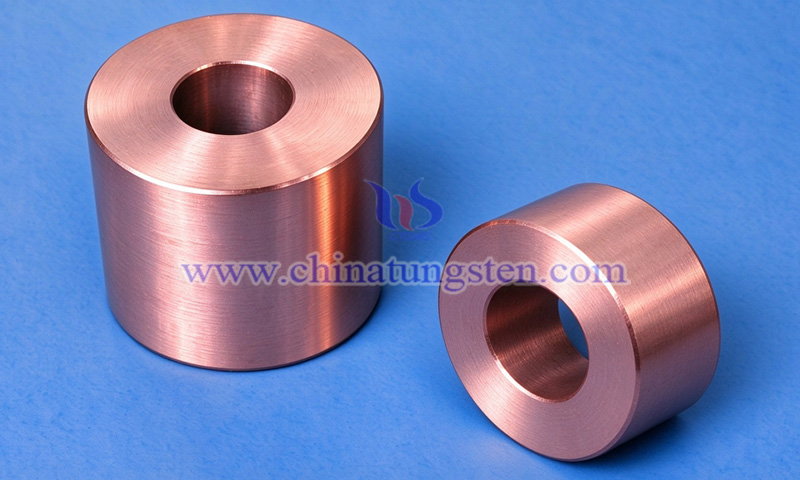
2. Features of CTIA's Tungsten Copper Rocket Engine Component
(1) Excellent Ultra-High Temperature Resistance & Strong Ablation Resistance: Tungsten has high melting point and can effectively resist ablation and erosion of gas flow above 2000°C. Typical linear ablation rate can be controlled within range of 0.002–0.015 mm/s.
(2) Transpiration Cooling & Good Thermal Protection: At high temperature, copper phase melts and evaporates, producing transpiration cooling effect and significantly reducing throat insert surface temperature.
(3) Excellent Thermal Conductivity & Low Thermal Stress: Copper phase conducts heat rapidly, reducing local overheating and thermal shock damage.
(4) High Strength & Stable Structure: Tungsten skeleton provides high-temperature strength and adapts to mechanical impact of high-pressure gas flow.
(5) Low Coefficient of Thermal Expansion & Good Matching: It helps match with surrounding structural material and reduces thermal cycle stress.
(6) Adjustable Composition Ratio to Suit Different Operating Condition: Commonly used high-tungsten compositions include W80Cu20, W85Cu15, and W90Cu10, which can be selected based on thermal load and operating time.
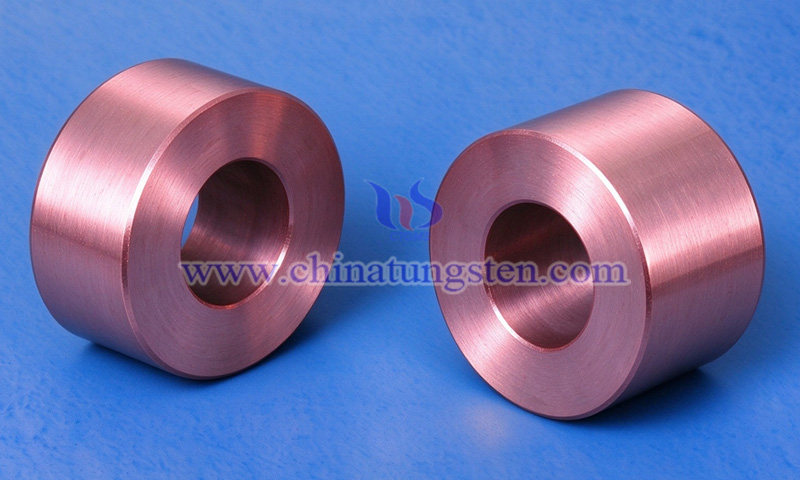
3. Applications of CTIA's Tungsten Copper Rocket Engine Component
(1) Solid-Fuel Rocket Engine Throat Liners: Used in the nozzle throat to withstand the highest temperatures and the most intense gas flow erosion; their ablation resistance directly determines the stability of the engine’s thrust.
(2) Nozzle Hot-End Components: Used in the high-temperature regions of the nozzle’s converging section, throat, and diverging section, utilizing evaporative cooling to reduce wall temperatures.
(3) Gas Rudders: Gas control surfaces used for rocket attitude control, designed to withstand the high-temperature, high-velocity gas flow environment.
(4) Other Hot-End Structural Components: Components for specialized propulsion systems that require extremely high resistance to high temperatures and particle erosion.
4. Specifications of CTIA's Tungsten Copper Rocket Engine Component
(1) Common Material Ratio: W80Cu20, W85Cu15, W90Cu10, W8Cu, etc.
(2) Product Form: Throat insert, nozzle section, jet vane, special-shaped hot-end part, etc., customizable
(3) Dimension and Tolerance: Customizable
CTIA has focused on tungsten-copper alloys for nearly 30 years, with extensive experience in powder metallurgy and precision machining, and can provide suitable tungsten-copper materials, structural designs, and precision machining solutions based on the operating temperature, gas flow erosion conditions, and structural requirements of rocket engine hot-end components.
For any inquiry, please contact tungsten copper manufacturer: CTIA GROUP
Email: sales@chinatungsten.com
Tel: 0086 592 5129696 / 0086 592 5129595
Website: tungsten-copper.com
WeChat: